


“The whole leaf covers the torn leaf” and “Love others as you love yourself” are precious cultural values of the Vietnamese people. However, this compassion is now becoming a “gold mine” for online scammers to exploit.
During natural disasters or when society is concerned about dire medical situations, the kindness of the community rises strongly. However, data from the reception system of Anti-Phishing shows: this is also the "business season" of cybercriminals.
From “fake” babies with serious illnesses to “self-made” flood zones, let’s join Anti-Fraud to expose these cruel tricks so that your kindness is directed to the right place.
“Vulture” trick: Stealing photos of sick children, impersonating hospitals
This is a trick that Anti-Fraud has received a lot of feedback about recently. Fraudsters will stop at nothing, including taking advantage of the painful images of sick children.
The parents of the children not only feel pain because their children are sick, but also panic when they see their children's photos being sold on social networks, while they have not received (and have not asked for) that money.
“Fishing in troubled waters”: Profiting from natural disasters
Every time the rainy and stormy season comes, like Typhoon Yagi in 2024 or the historic floods in 2022 and 2025, taking advantage of the chaotic information situation and the "saving people like putting out a fire" mentality, scam groups operate at full capacity.
When you transfer 50k, 100k to a scammer, the damage is not just the loss of that money:
- The person who really needs the money loses the opportunity: That amount of money could have saved a life in real danger, and provided additional support to struggling families struggling with natural disasters.
- Erosion of social trust: When fraud is rampant, philanthropists will become wary and suspicious. This unintentionally harms genuine charitable organizations and the unfortunate lives waiting to be helped.
Common signs: Don't let your kindness be taken advantage of
Whether it's a flood scenario or a serious illness, all of these scams share some "dead spots" that you can easily spot:
❌ “Fatal” sign: The account receiving money is PERSONAL
- Organizations such as the Fatherland Front, major hospitals, and official charity funds NEVER raise donations through personal accounts (Accounts with personal names such as NGUYEN VAN A, TRAN THI B...).
- They always use accounts in the name of the Organization/Unit and have clearly published red seal documents.
❌ Time pressure (create urgency)
- Scammers always use strong pressure words: “Urgent need tonight”, “Just a few more hours”, “"Urgent"”…The purpose is to scare you and make you move money emotionally instead of using reason to check.
- Doctors and hospitals always give priority to saving people, never There is a story "if you don't transfer enough money now, the hospital will return it" as fabricated in the scam articles.
❌ “Unusual” Fanpage”
- Please check the item “Page Transparency”.
- If the site claims to be a major hospital or a reputable relief fund but has only been established a few days ago, or the previous page name was "Clothes Shop", "Selling beautiful sim numbers"... then 100% is a scam.
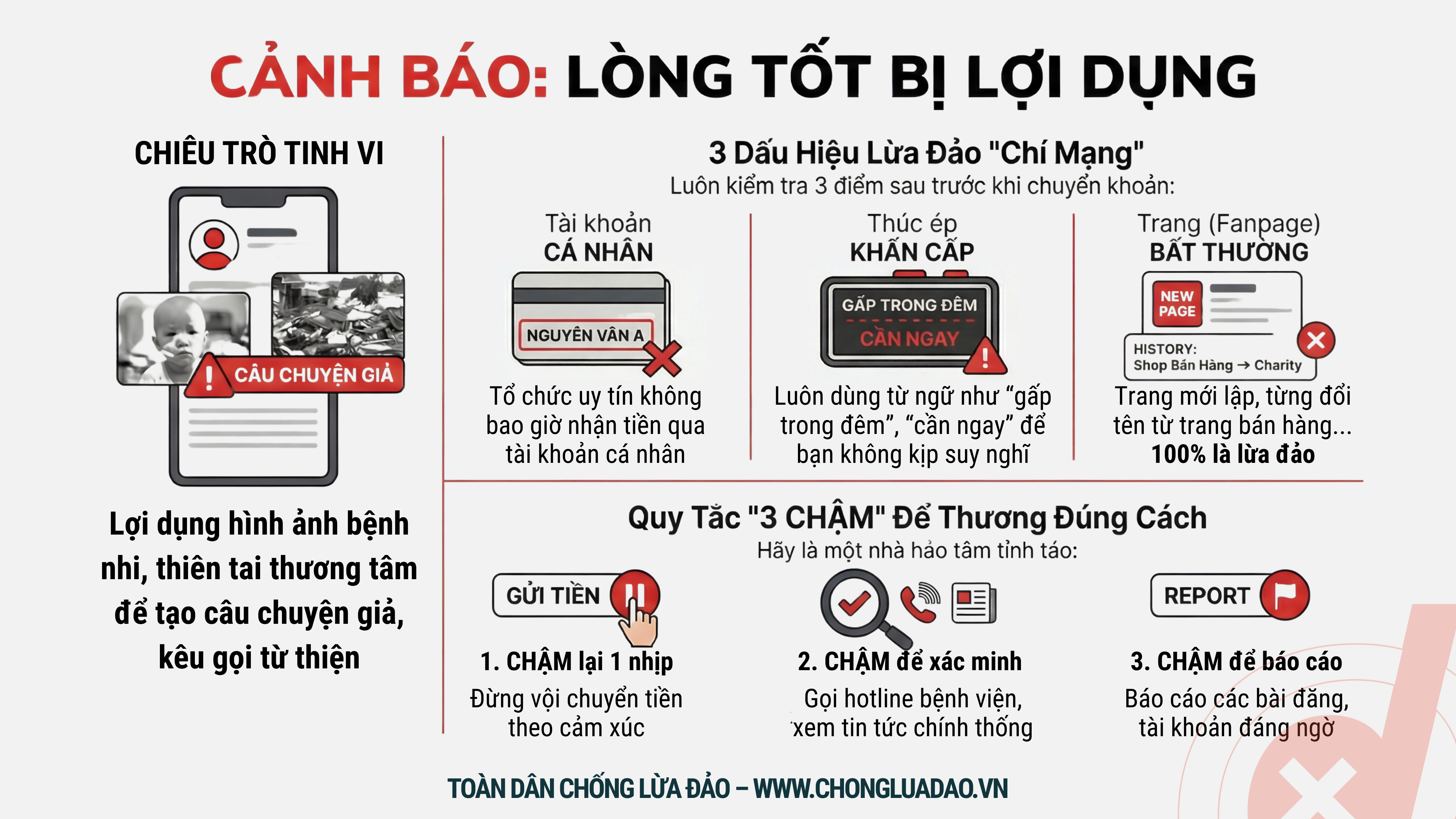
Advice from Anti-Scam: Slow down a beat to trade properly
We don't discourage kindness, but we do ask that you be a conscious philanthropist.



 English
  Vietnamese