Scamming the elderly under the guise of charity, religion, and social welfare.
Currently, fraudsters are exploiting the anxieties about illness, the desire for extra income, and the kindness of the elderly to carry out many sophisticated scams. Using the guise of charity, religion, and social welfare organizations is one such tactic […] from Scamming the elderly under the guise of charity, religion, and social welfare.
by
Editor CLD
schedule12/12/2025
Currently, fraudsters are exploiting the anxieties about illness, the desire for additional income, and the kindness of the elderly to carry out many sophisticated scams. Using the guise of charity, religion, and social welfare organizations is a particularly insidious tactic because it preys on the elderly's desire for good deeds, their wish to accumulate merit, and their empathy. These fraudsters turn the victims' kindness into a tool for their own gain.
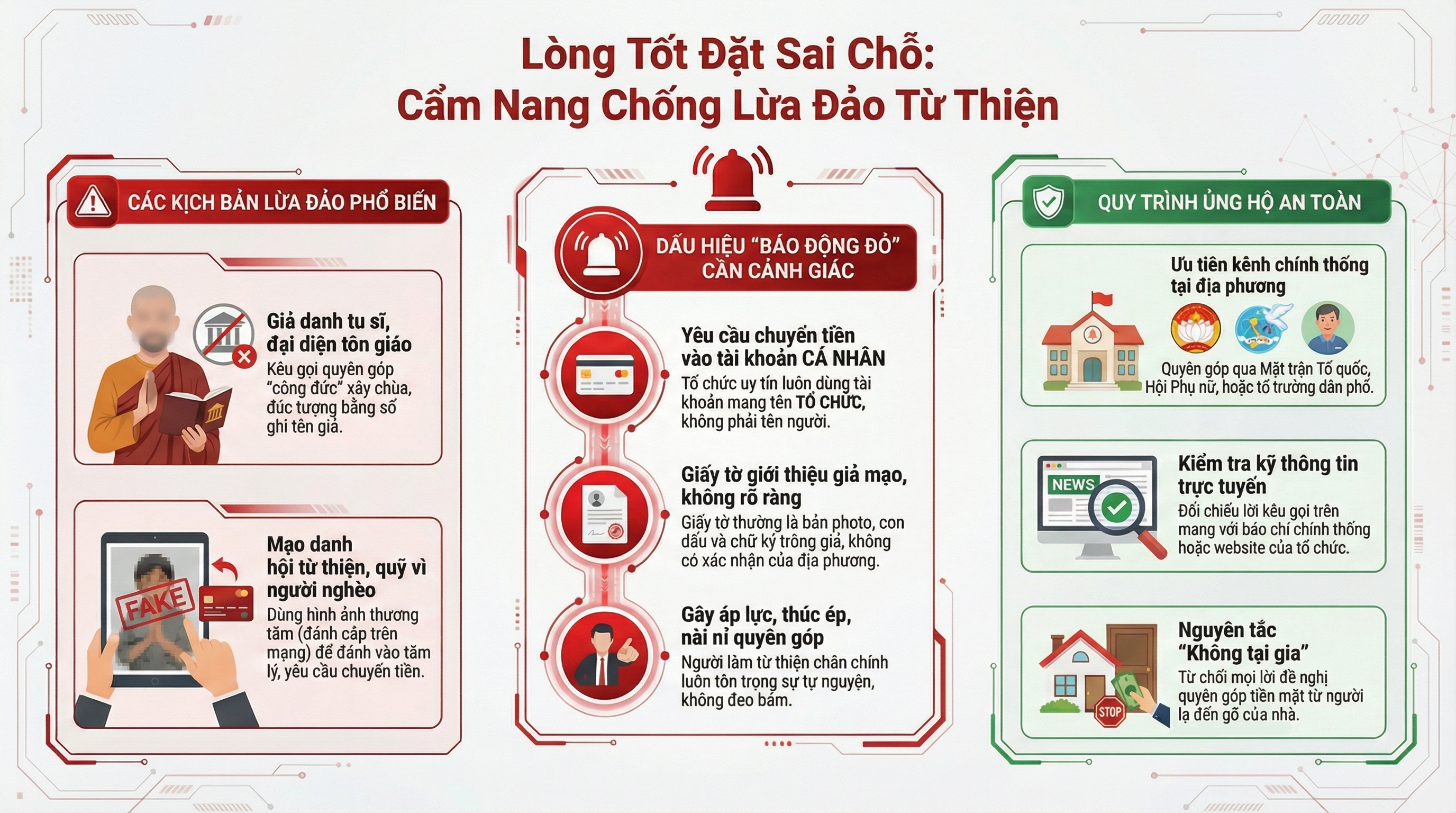
Impersonating a monk, priest, or representative of a religious organization.
Bait: Criminals shave their heads, wear monk's robes or the attire of charitable organizations, and go door-to-door or approach elderly people in public areas (parks, markets).
Manipulation:
Presenting "Golden Books" or "Books of Merit" (often fake or poorly photocopied) containing the names of many people who have contributed large sums of money is used to create psychological pressure (the anchoring effect).
The fundraising appeals were for: "Casting bells and sculpting statues," "Building temples in remote areas," or "Offering prayers to ward off bad luck.".
Act: Collecting cash directly without issuing receipts or issuing forged receipts.
Impersonating a poverty alleviation organization/fund
Bait: They falsely claim to be members of the "Red Cross," the "Children's Welfare Fund," or even invent impressive-sounding organization names like the "International Golden Heart Fund.".
Manipulation:
Show heartbreaking images (children with serious illnesses, lonely elderly people, victims of storms and floods...). Note: These images are often stolen from the internet or digitally manipulated.
They used psychological tactics: "By skipping one breakfast, you're saving a life," playing on the feeling of guilt if you didn't donate.
Act: Request a bank transfer to a personal account (instead of an organizational account) or cash payment on the spot.
Signs of recognition
We need to guide older adults in identifying a lack of transparency:
The receiving account is for individuals.Legitimate charitable organizations always use bank accounts in the name of the organization/fund, never in the name of an individual (like Nguyen Van A, Tran Thi B...).
Ambiguous identification documentsFailure to present a membership card or a letter of introduction from a local authority (People's Committee, Fatherland Front). Documents carried are often photocopies, with signatures and seals appearing forged (printed in color).
Coercion to collect donationsGenuine philanthropists always respect voluntary donations. Scammers often pester, pester, or become annoyed when elderly people hesitate to donate.
Safe support process
To ensure that kindness is directed appropriately, it is necessary to recommend that the elderly adhere to the principle of "Smart Charity":
Prioritize official local channels:
Only contribute when there is an official call from: the neighborhood group leader, the Women's Union, the Veterans' Association, or the Vietnam Fatherland Front in your residential area.
This is the safest channel because it is monitored by the community and local authorities.
Verify the information online carefully:
If you want to support causes online, you need to cross-check the information on mainstream news sites or the official website of the organization.
Absolutely do not transfer money in response to unverified requests on Facebook/Zalo.
The "Not at home" principle:
Refuse any cash donations from strangers who come knocking on your door (unless accompanied by the neighborhood leader/local police officer).






 English
  Vietnamese