


Have you ever seen a brand-new online store with tens of thousands of followers, or a video that just got millions of views? Or received tons of strange messages every day inviting you to invest, announcing you've won a prize, or threatening you with "cold penalties"?
In reality, most of that isn't created by real people, but comes from two little-noticed "machines": phone farms and SIM farms. They turn the creation of fake interactions and the distribution of spam messages into a mass production line. Anti-Phishing Let's explain it in simpler terms.
1. What are phone farms and SIM farms? In the simplest terms...
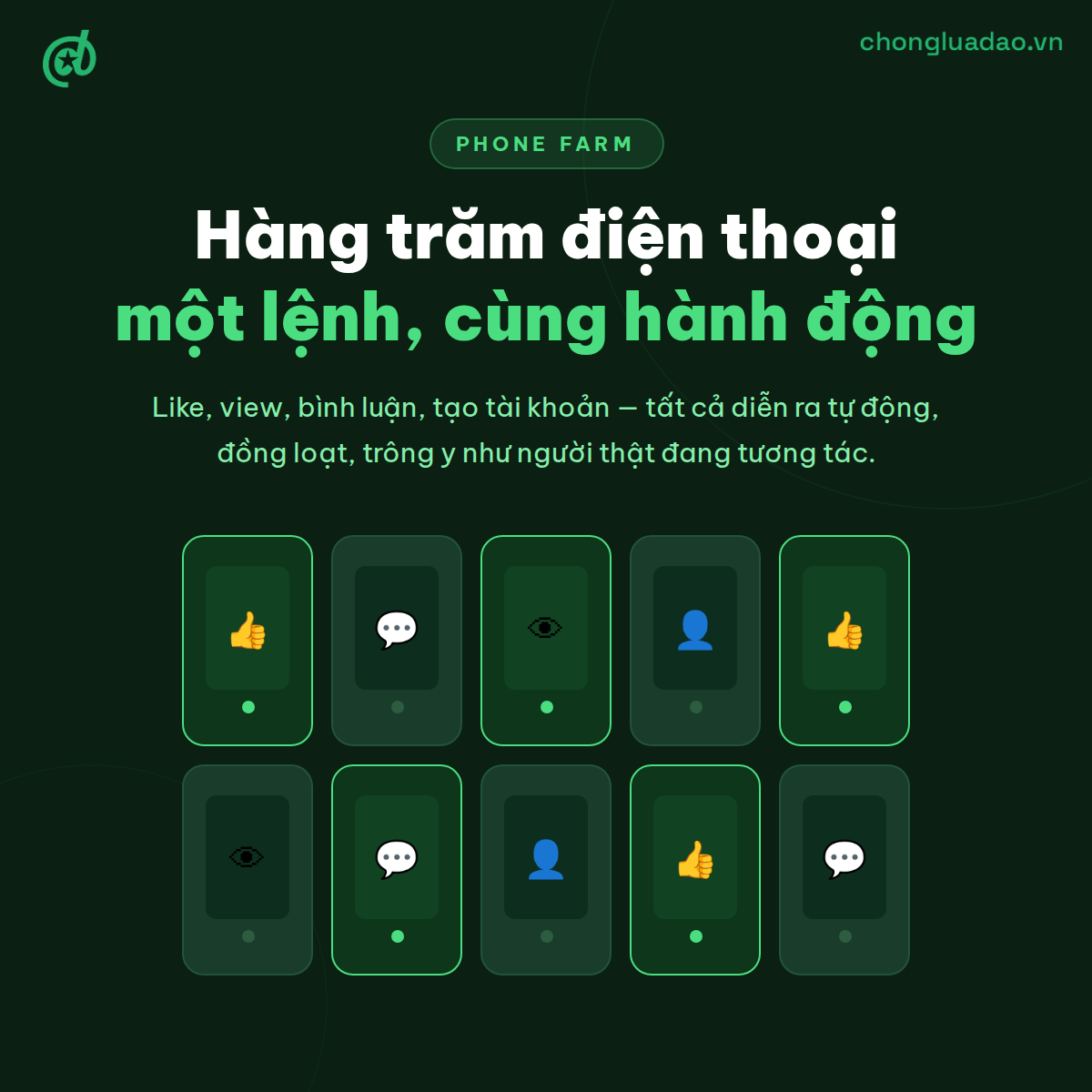
Simply put, phone farm A "phone farm" is a setup consisting of a series of old phones placed close together. A control app is installed, and all the phones are instructed to perform the same task: watching videos, liking posts, commenting, adding friends, and even creating and nurturing accounts. Some places even go to the extreme of removing the batteries and casings, keeping only the circuit boards and connecting them to a computer for a cleaner setup; professionals call this a "box farm" (a box for generating views).
If phone farms are considered a "tool," then using them to generate fake likes, views, and followers is called... click farm, The purpose is to trick the algorithm so that the content gets pushed further. Thanks to this, a newly created account can appear "hot," while an ordinary product suddenly seems to be sought after by the entire community.
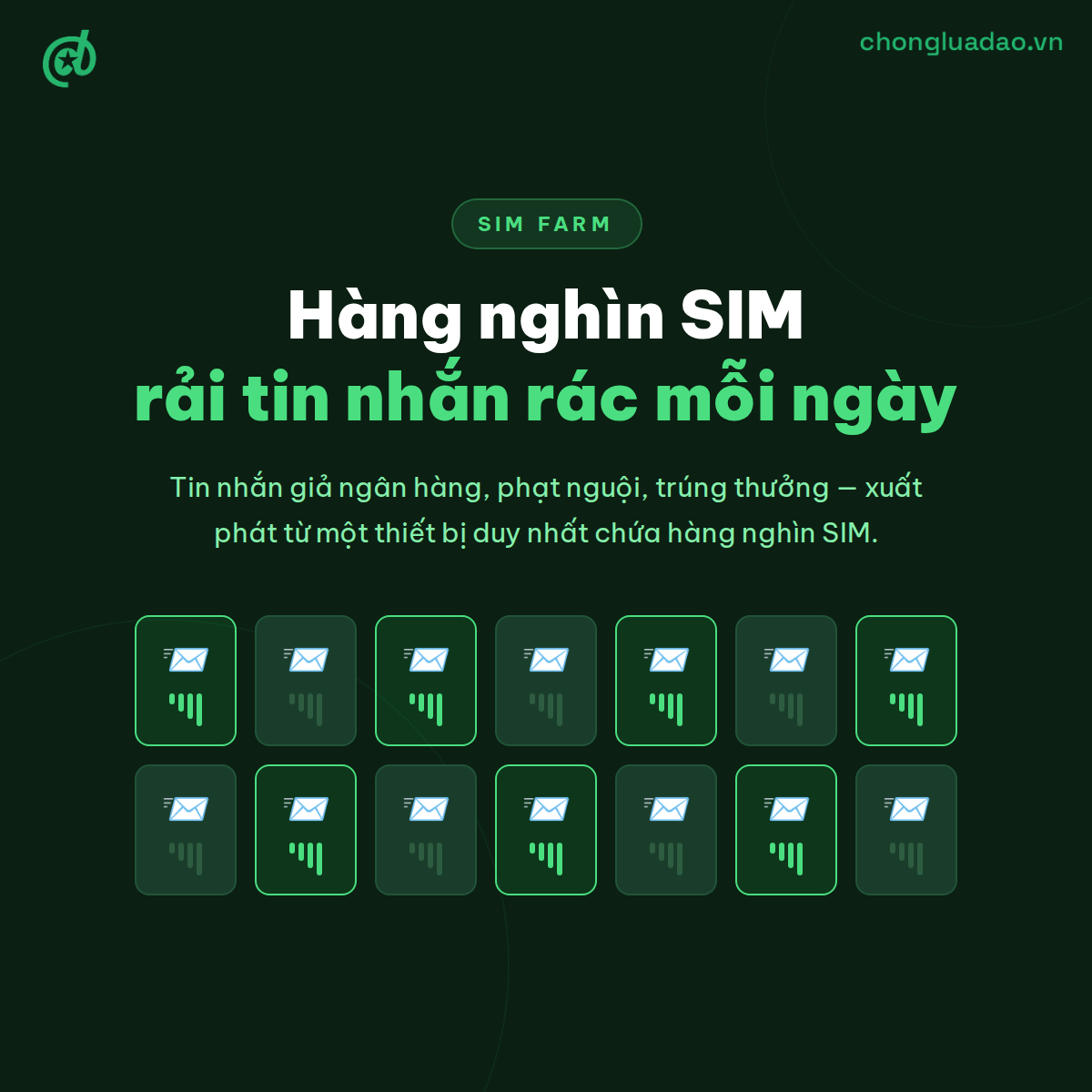
Still SIM Farm (or “SIM box”) are devices that hold thousands of SIM cards at once, specifically designed for sending mass text messages and making mass calls. According to US authorities, a SIM farm location You can send as many messages as you would to a thousand phone numbers combined.
In short, phone farms specialize in "farming" interactions and accounts, while SIM farms specialize in "scattering" messages, and both often work together in scam schemes.
2. How do phone farms and SIM farms work?
Imagine someone sitting in front of a computer, pressing a button and hundreds of phones simultaneously responding. The challenge lies in preventing the platform from detecting it. Therefore, each phone is run dozens of "virtual operating systems," each mimicking the specifications of a different real device, so that Facebook or Telegram believe they are dozens of separate users. The operators also constantly change the operating methods and control code to evade the platform's automatic scanning systems.
SIM farms are more sophisticated in a different way: these SIM arrays are used to receive OTP codes in bulk, thereby creating countless "clean" accounts that look like real people, which are the raw materials for feeding bots and running phishing campaigns.
Notably, this type of service is now being sold as a "service," meaning anyone with money can rent it without needing technical expertise. In February 2026, infrastructure intelligence firm Infrawatch discovered a SIM farm rental platform called ProxySmart: 87 control panels located in 17 countries and at least 94 physical locations.
3. How dangerous are they?
At the mildest level, this is just interactive cheating, for fun, or showing off. But in the wrong hands, that same setup can cause far more serious harm:
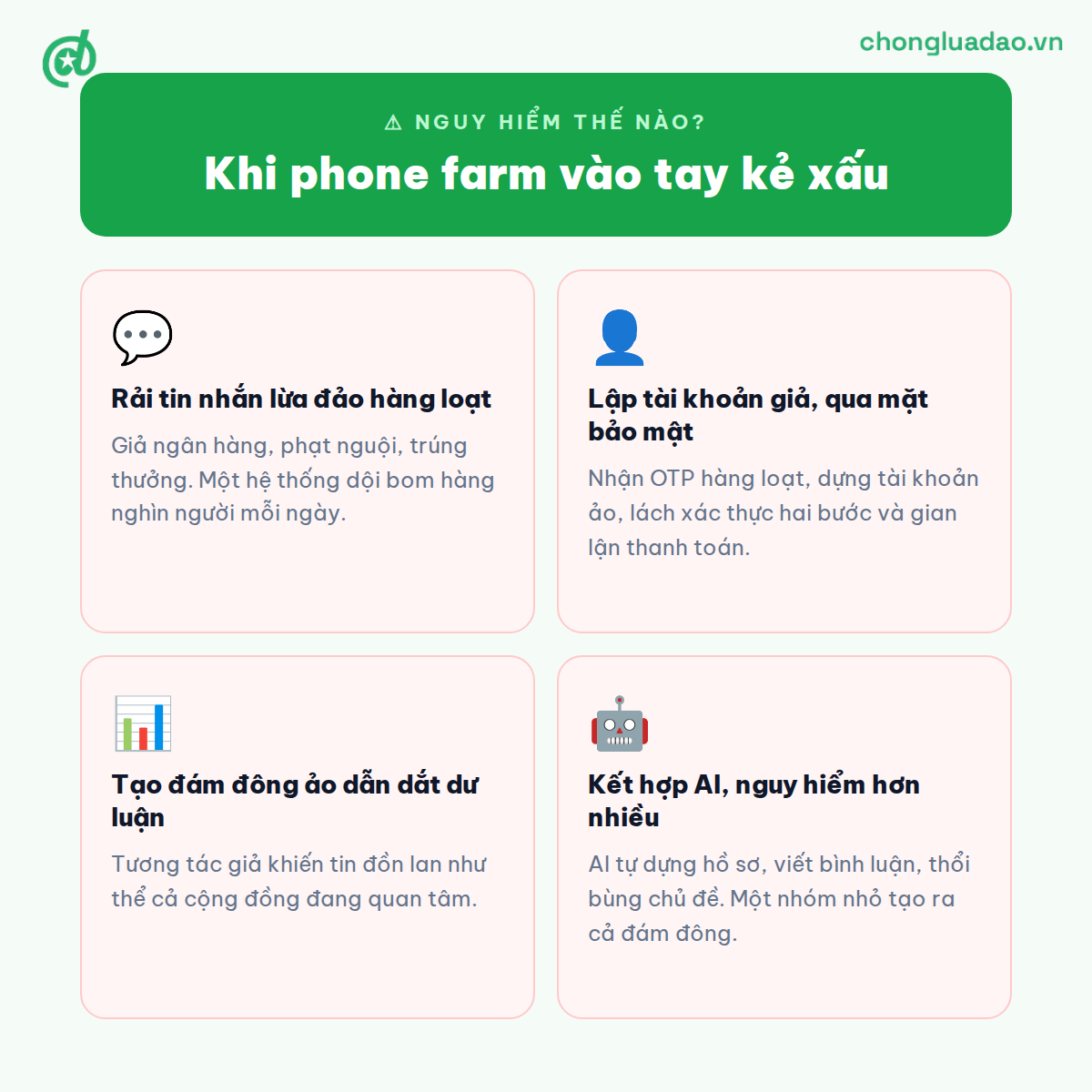
- Mass distribution of phishing messages: The fraudulent bank messages, traffic violation notices, or prize winning notifications you receive mostly originate from these SIM card networks. Just one system is enough to bombard thousands of people every day.
- Creating fake accounts and bypassing security: By receiving OTP codes in bulk, fraudsters create countless fake accounts to breed bots, commit payment fraud, and even bypass two-factor authentication.
- Creating a "virtual crowd" to manipulate public opinion: With enough fake interaction, a rumor or harmful content can spread as if the entire community is paying attention.
- Providing infrastructure for large-scale fraud schemes: In the network led by Chen Zhi (Prince Group), just two dismantled facilities contained 1,250 phones controlling approximately 76,000 social media accounts. In September 2025, the US Secret Service announced the dismantling of a network located near the United Nations headquarters, seizing over 300 server SIMs and more than 100,000 SIM cards.
- It's causing congestion in phone signals: Experts warn that a sufficiently large array of SIM cards could overload a cell tower, affecting even emergency calls.
Things become even more concerning when phone farms combine with AI. Previously, each virtual account required manual operation by a human, but now AI can make the entire "farm" self-sufficient: automatically creating profiles that look just like real people, writing comments, generating images, and instantly turning a topic into a viral sensation.
In other words, when AI combines with phone farms and SIM farms, even a small group can create a whole "crowd" to manipulate public opinion or build false belief in a scam, making it very difficult to trace the perpetrators.
4. What should users do to protect themselves?
With just a few simple habits, you can completely protect yourself from these "farms":
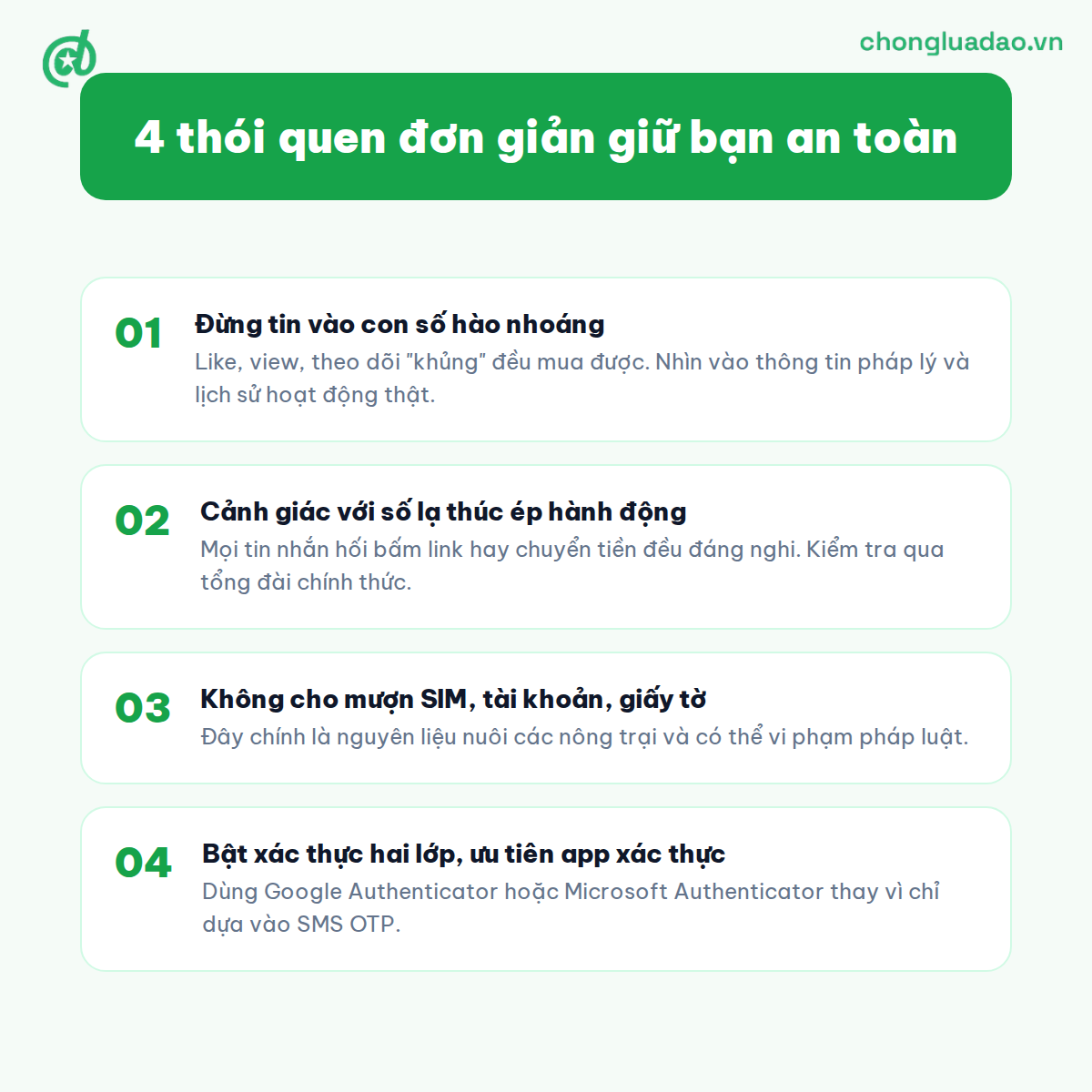
- Don't be fooled by the flashy numbers: Huge numbers of followers, likes, and comments can all be bought, so don't use them as a measure of a shop's, fan page's, or investment platform's credibility. Look at legal information, genuine reviews, and operating history.
- Be wary of unknown numbers: Any messages or calls urging you to click a link, read an OTP code, or transfer money are suspicious. Stop and check with the official hotline or app; do not click on any links in messages.
- Keep your identity private: Don't register SIM cards for strangers, don't sell or lend your social media and bank accounts; these are the "ingredients" that sustain your farms.
- Enable two-factor authentication. For email, banking, and social media, prioritize using authentication apps instead of relying solely on SMS.
 English
  Vietnamese