



Every time you download a new app, fill out a gift form, or quickly click "agree" to skip a screen, you're leaving behind a piece of information about yourself. When enough pieces are collected, malicious actors can completely reconstruct your profile for fraudulent purposes. This article will show you how your data is leaked, how malicious actors turn it into a tool for scams, and how you can protect yourself.
1. What are you "giving away" each day?
Much of the data leaks don't come from sophisticated hacks, but rather from our own unintentional daily sharing habits.
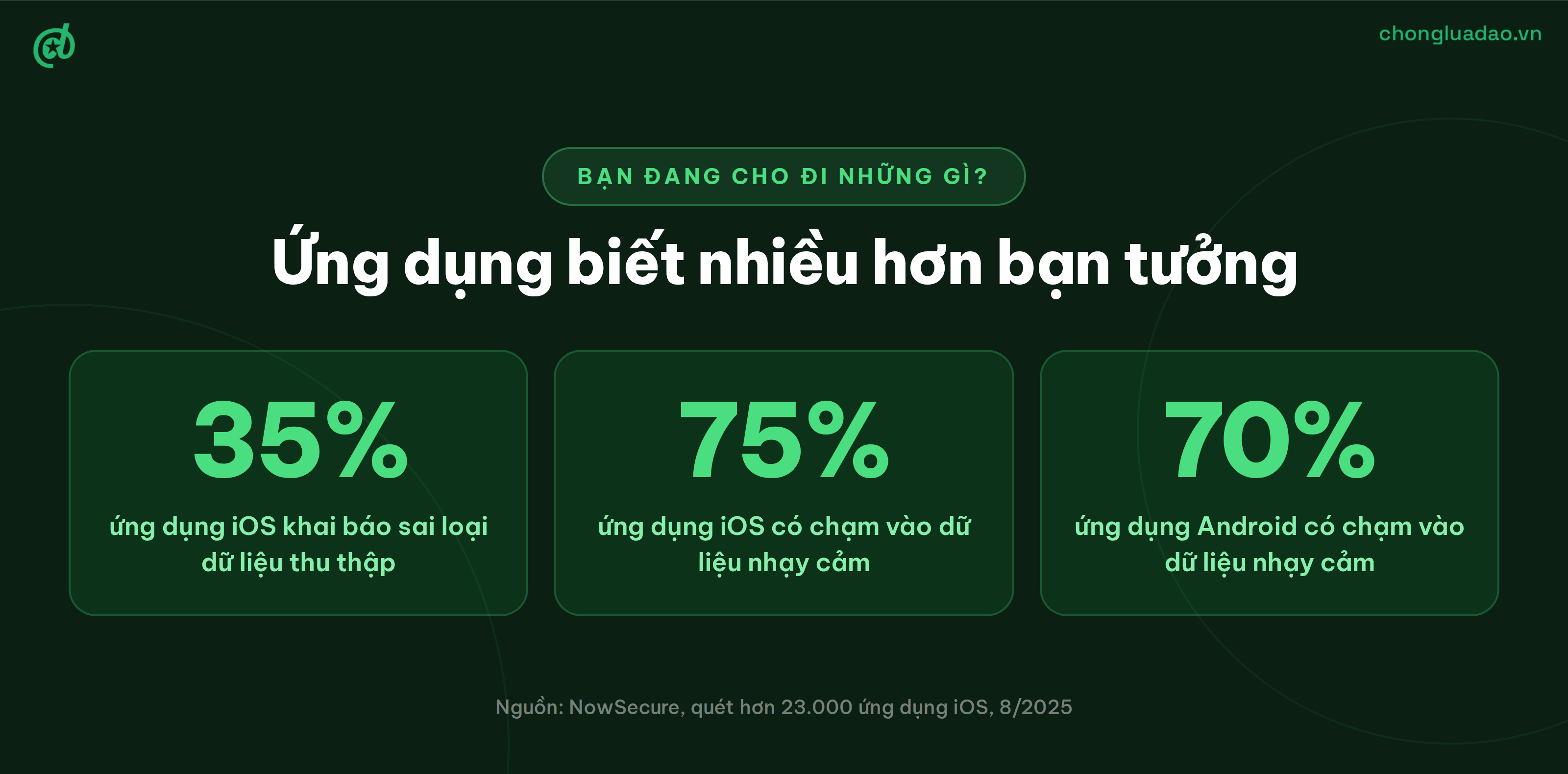
- Smartphones are the biggest "gateway" for data leaks: A study by security firm NowSecure that scanned over 23,000 iOS apps in August 2025 found that 351 apps did not correctly declare the types of data they actually collected. As of August 2025, approximately 751 iOS apps and 701 Android apps were touching sensitive data and silently sending signals to tracking domains for advertising or resale to third parties. Many apps also demanded access to the camera, microphone, location, and contacts far beyond what was necessary to function.
- Everyday activities: Data can easily leak out through filling out online surveys, registering for promotions, or participating in raffles. In Vietnam, authorities have noted that personal information is often collected from these channels or leaked from businesses that store customer data.
Individual pieces of information may seem harmless, but the danger lies in the fact that they are combined to form a complete picture of you.
2. From fragments to a complete file
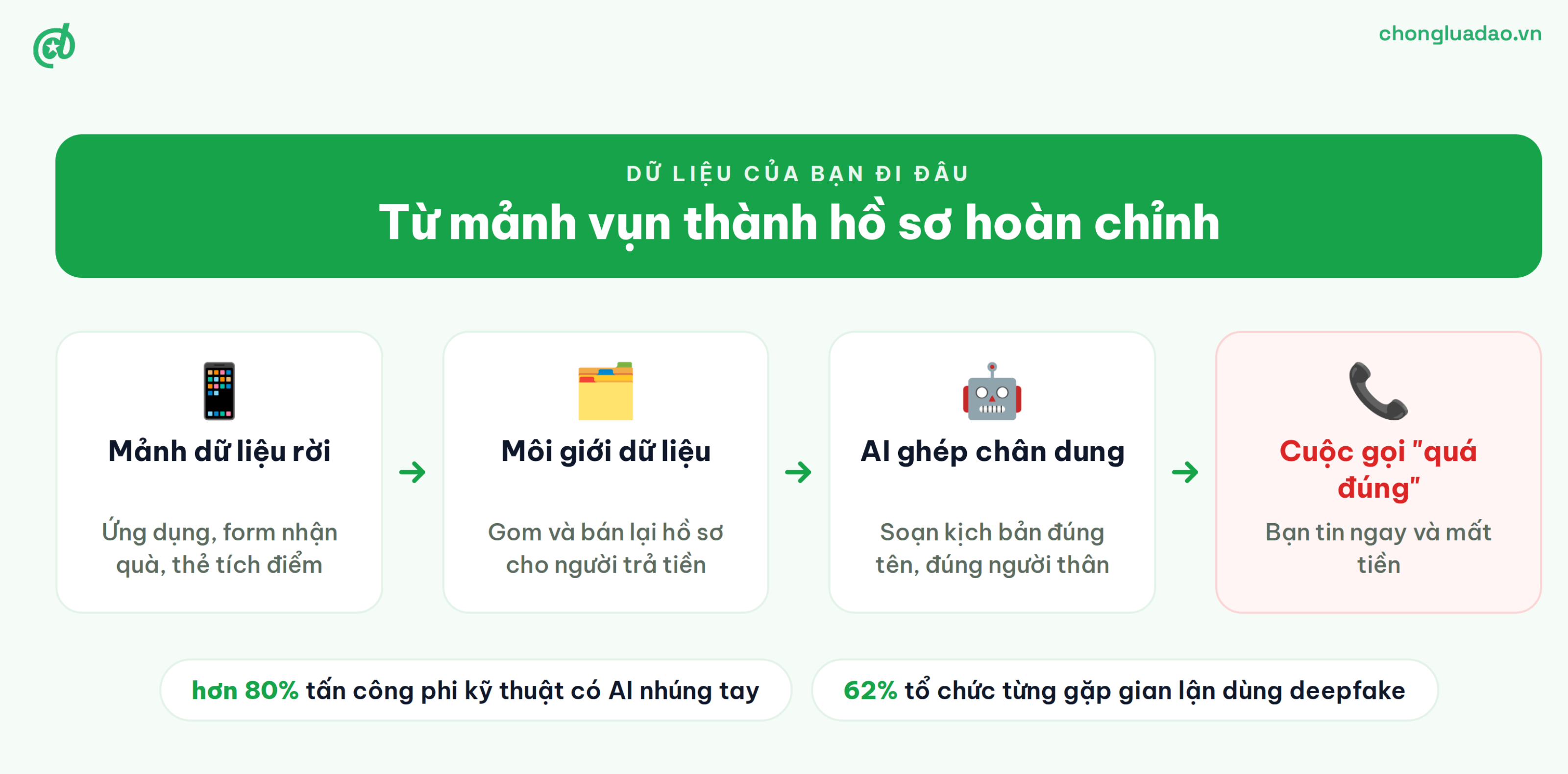
Currently, the industry is called Data Broker (Data brokers) are making a living by collecting disparate pieces of information from public records, mobile applications, and loyalty cards, assembling them into detailed profiles, and selling them to anyone who pays. According to a report... Fox News Published on April 25, 2026, in less than 10 minutes and for a small fee, scammers can look up information on these sites to find out the victim's age, address, relatives, and even their previous place of residence, causing their vigilance to quickly crumble when they receive a call that correctly states those old details.
Beyond simply buying and selling raw data, cybercriminals are also applying artificial intelligence to personalize their tactics through OSINT (Investigative Intelligence of Public Information on Social Media and News). A report from Kaspersky (Securelist) on August 19, 2025, indicates that cybercriminals are using AI-powered OSINT tools to compose emails and messages impersonating superiors or colleagues with extremely accurate internal details. Statistics from the ENISA Threat Landscape 2025 show that over 80% non-technical attacks globally currently involve AI.
In addition, short audio or video clips publicly available on social media also become perfect source material for AI to create technology. deepfake, This involves impersonating voices and images that closely resemble real people to commit fraud. This is a very real and significant threat, as a 2025 Gartner survey recorded that 621 organizations had faced attacks using this technology in fraudulent activities.
3. What should you do to control your personal data?
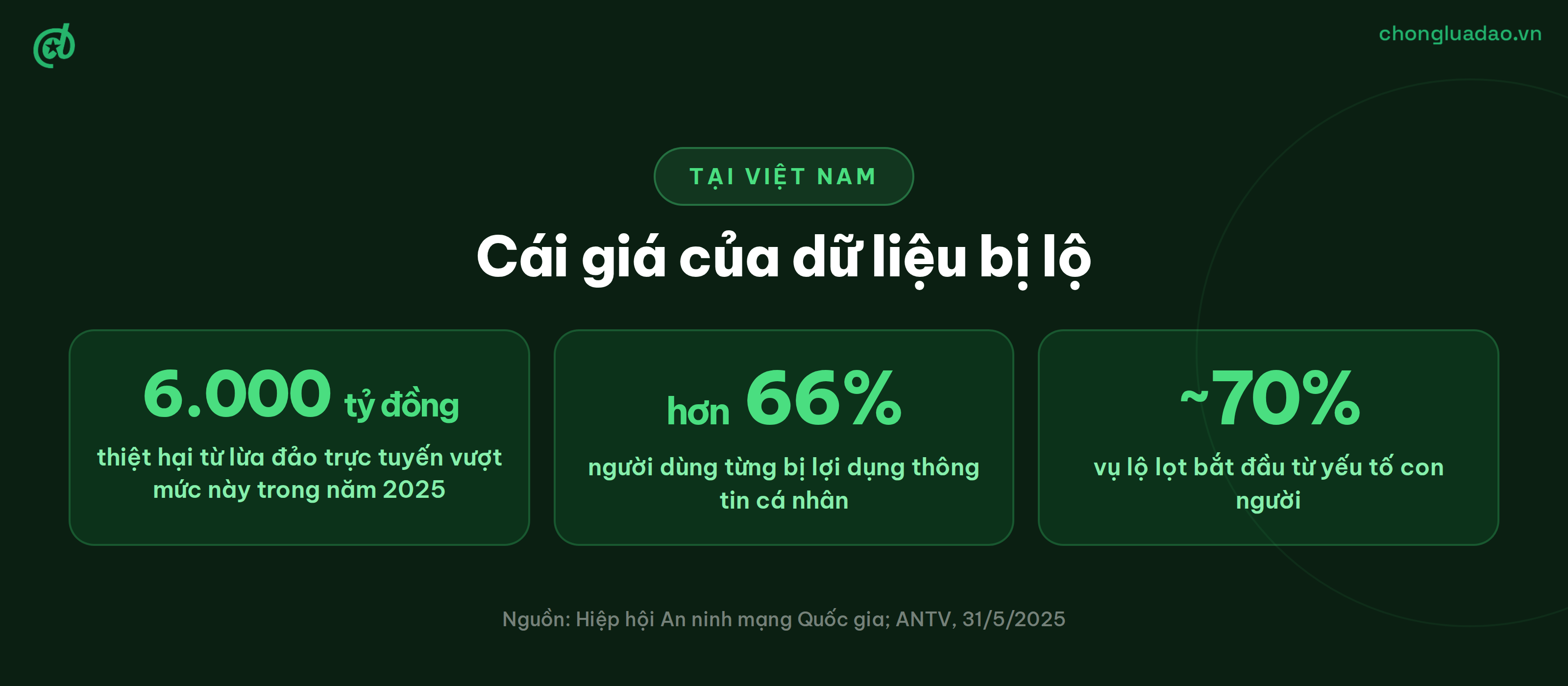
In Vietnam, the issue of personal data security and leaks is raising alarm bells on an increasingly large scale. The consequences of this situation cause severe damage to society as a whole. The National Cybersecurity Association estimates that online scams stemming from the exploitation of personal data will cause losses exceeding 6 trillion VND in 2025, while ANTV channel (May 31, 2025) also indicated that over 661 users in the country have admitted their information was illegally exploited. Notably, nearly 701 users attributed the leaks to human factors – primarily subjective usage habits – rather than purely technical vulnerabilities.
It's very difficult to completely erase all traces online, but you can certainly make your profile more fragmented and less attractive to criminals:
- Check and revoke app permissions: Proactively disable location, microphone, and contact access permissions for apps that aren't really necessary. Uninstall apps that you haven't used in a long time.
- Be cautious with information forms: Before filling in your name, phone number, or ID number to receive a gift or participate in a promotion, ask yourself: What exactly does this place collect the data for, and how long will they keep it?
- Be wary of "overly familiar" details: A stranger calling and correctly stating your name, old address, or the name of a relative doesn't prove they're a real acquaintance or official. This is a common tactic to lower your guard.
- Don't blindly trust what you see and hear: Current deepfake technologies can even fake the faces and voices of loved ones. If you receive an urgent money transfer request via phone, proactively call back using an independent contact you have saved in your address book to verify.
- Take advantage of the new legal framework: From May 1, 2026, under the Law on Personal Data Protection, you have the right to request organizations and businesses to clearly explain how they store your information, and you also have the right to request the withdrawal of consent at any time.
Once data is leaked, it's very difficult to recover. However, if you hesitate for even a second before clicking "Agree" or filling out online forms, you're removing a crucial piece of the puzzle that criminals can exploit.




 English
  Vietnamese