


During this year's peak tourist season, online booking scams for tours, accommodations, and airline tickets have become extremely complex. Police in Dak Lak, Ninh Binh, An Giang, and Quang Ninh provinces, along with numerous media outlets, have repeatedly issued warnings about the fraudulent use of fake fan pages and websites of reputable accommodation establishments and travel companies to steal deposits from tourists.
According to the Dak Lak Provincial Police, the most common scam involves creating fake social media pages and running advertisements with numerous "huge" deals to lure people. The perpetrators often offer all-inclusive packages (flight tickets and hotel rooms) at prices significantly lower than the market rate, ranging from 30% to 50%. Exploiting consumers' desire for cheap travel, these scammers set sophisticated traps, causing many people to lose money after just a few bank transfers.
“Social media "verification badges" have become a tool for building trust.
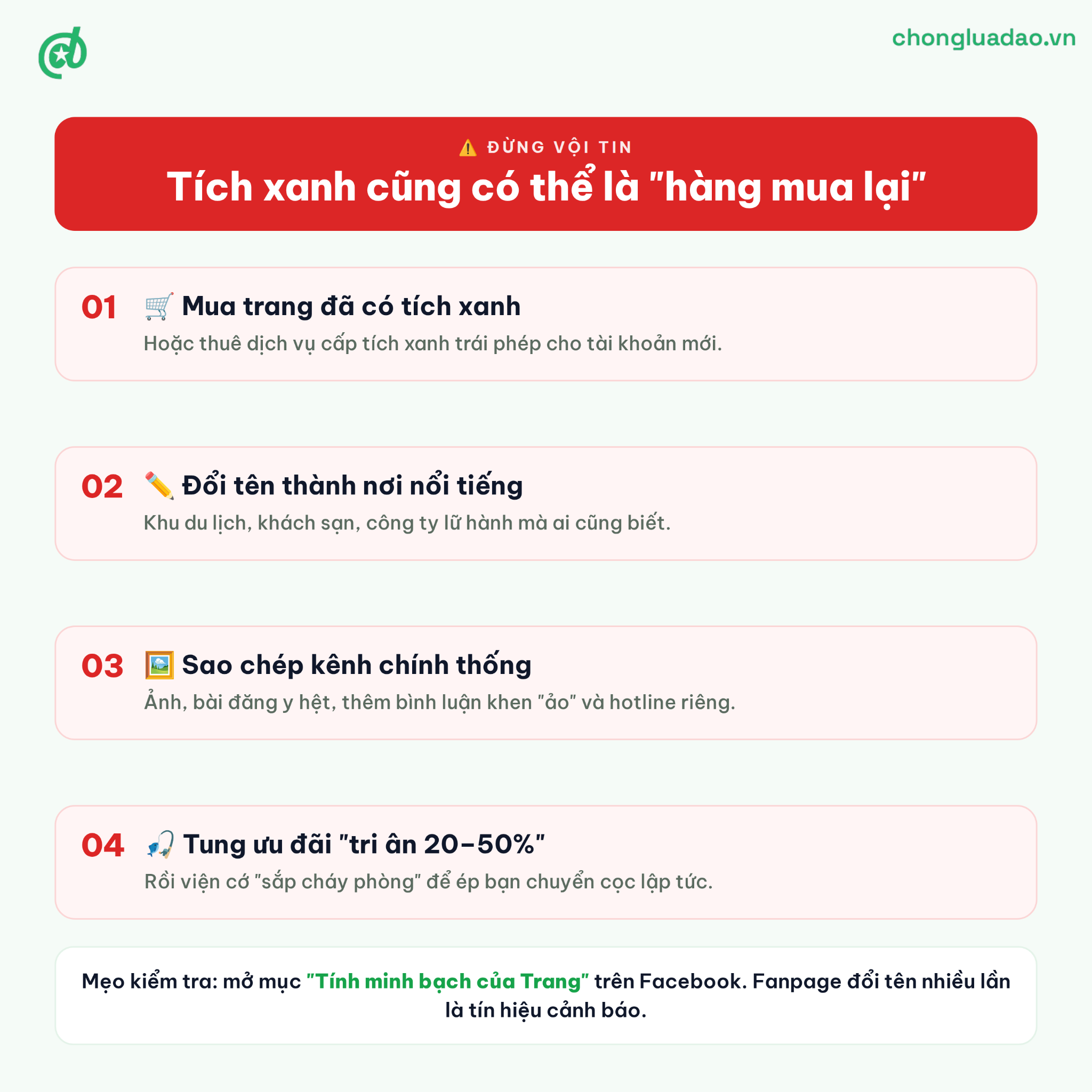
In recent scams, the blue checkmark (the identity verification symbol issued by Facebook) is being systematically exploited.
According to the police in Ninh Binh and An Giang provinces, the perpetrators often buy back social media accounts that already have blue verification badges, or hire services to illegally obtain blue verification badges. They then change the page names to those of famous tourist destinations, hotels, or travel companies.
To deceive users, they copy images and posts exactly from legitimate channels; and simultaneously launch "thank you discount 20-50%" programs. They even buy fake reviews praising the service and set up hotlines for consultations. When victims fall for the bait, the perpetrators often use the excuse of "rooms almost fully booked" to pressure customers into transferring the deposit immediately.
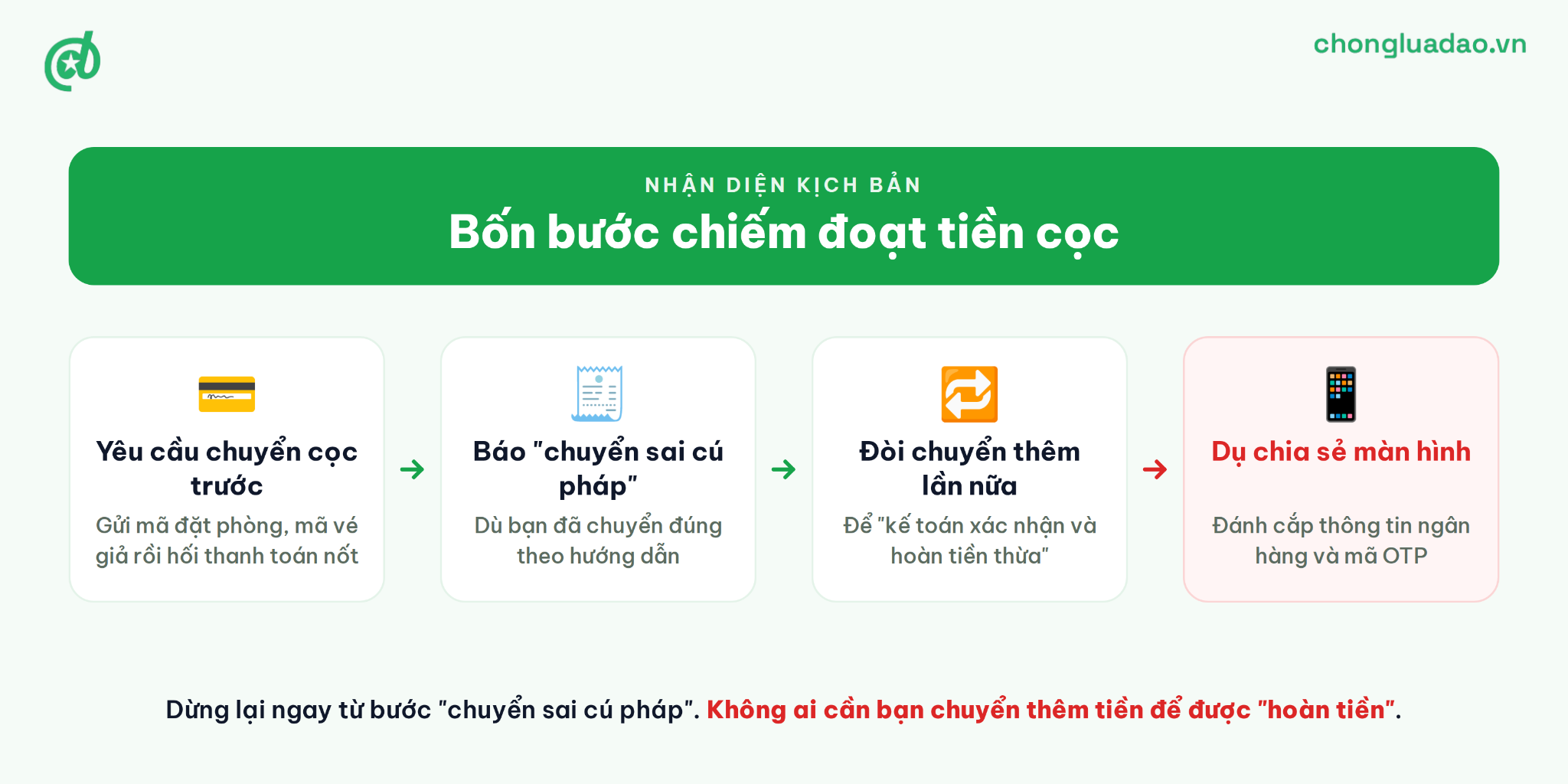
When tourists fall into the trap and contact the service provider to book, the scam typically unfolds according to the following scenario:
- Step 1: The perpetrators request customers to transfer a deposit in advance, provide fake booking codes or ticket codes, and then continue to pressure them to pay the remaining balance.
- Step 2: According to a report from the Culture Newspaper, after receiving the money, the scammers will inform the customer that they "transferred the money using the wrong method" and request a refund of an equivalent amount for the accountant to "confirm and return the excess." Furthermore, they will entice victims to share their phone screens to steal their bank account login information and OTP codes.
Double damage: Victims lose money, businesses lose reputation.
In early August 2026, a tourist preparing to go to Phu Quoc was scammed out of 6 million VND when booking tickets to a show through a fake verified Facebook page. The page was professionally designed, responded quickly to messages, and the bank account receiving payments was also in the name of the business, leading the victim to completely trust it.
The consequences extend beyond consumers; businesses whose identities are being impersonated also suffer significant losses. A representative from a restaurant in Phu Quoc shared that their brand reputation was severely damaged, with many customers only realizing they had been scammed after transferring money and confronting the perpetrators in person. The Quang Ninh Provincial Police believe that, taking advantage of the increased demand for tourism, cybercriminals are increasingly targeting popular destinations with extremely sophisticated methods.
Advice on preventing scams
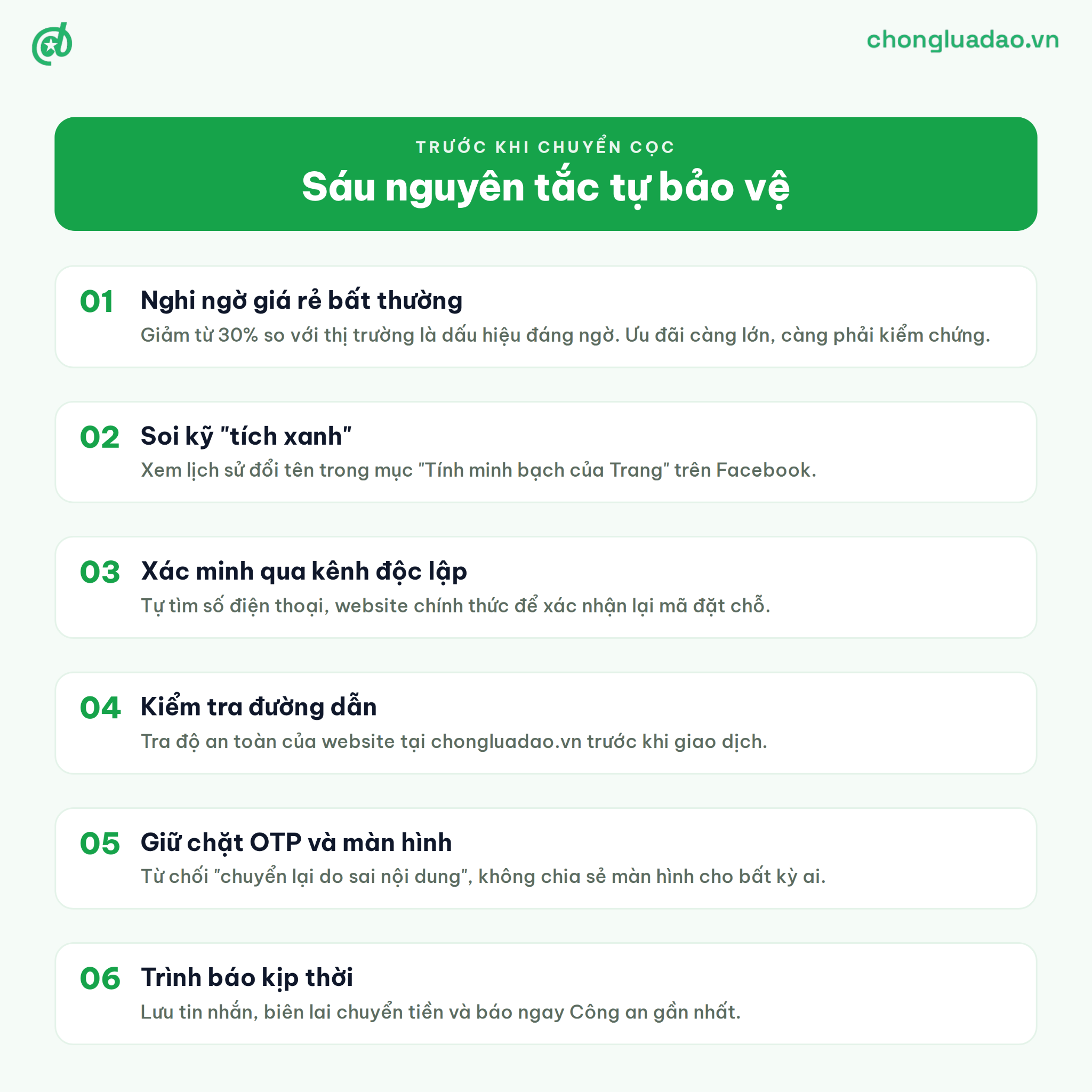
To protect themselves and their property, people should keep the following principles in mind:
- Beware of unusually low prices: Discounts of 30% or more compared to market prices are suspicious. The bigger the offer, the more thorough the verification needed.
- Don't blindly trust the "blue checkmark": Check the page history in the "Page Transparency" section on Facebook. A fan page that frequently changes its name is a warning sign of a scam.
- Verification via independent channels: Instead of calling the number provided by the fan page, proactively search for the official phone number or website of the hotel or airline on Google to confirm your booking.
- Check the safety of the pathway: Check the website's safety level at chongluadao.vn before executing the transaction.
- Absolute data security: Firmly refuse requests for "refunds due to incorrect information." Absolutely do not share your phone screen or provide your OTP code to anyone.
- Report promptly: If you suspect you've been scammed, save your entire message history and money transfer receipts, and report it immediately to the nearest police station.
 English
  Vietnamese